
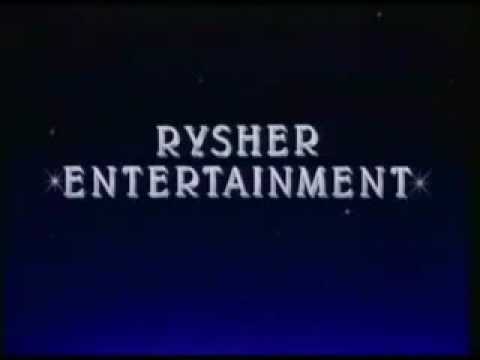
In today’s article we will take a look at a television syndicate turned motion picture company. Rysher Entertainment was founded in 1991 by Keith Samples. The company was named after his children Ryan and Sheridan. The company’s very first foray into television was the handling and selling of syndication rights to NBC’s tween sitcom Saved by the Bell. At the time NBC was barred from distributing the series due to fin-syn laws, a set of laws set by the FCC that forbade networks from distributing their own shows.

The deal with Saved by the Bell had worked so well that NBC allowed Rysher to distribute the show’s precursor a.k.a Season 0, Good Morning Miss Bliss, as well as future spin-offs. Through Rysher, season 0 was re-edited into episodes of Saved and was added to the syndication package that the company had sold to local affiliates. The success of this deal would later allow the company to handle another NBC series, California Dreams.

When Rysher launched its theatrical branch Cox overhauled the logo with more modern day graphics, CGI and the hills became mountains.
In 1993, Cox Enterprises acquired Rysher for $15 million which saw the company expand. It was merged with Television Program Enterprises (TPE) and took on the management of Bing Crosby Productions’ catalog. The merger with TPE allowed Rysher to produce and distribute a variety of shows that included “Star Search” and “Lifestyles of the Rich and Famous.” In 1995 the company prepared to launch its own theatrical film division.

Destiny Turns on the Radio was Rysher’s first theatrical film released on April 28, 1995 and the first of three in a deal with Savoy Pictures. The film was not a box office success, as it only grossed $1,176,982 at the box office and a budget is not applicable. The film never saw a DVD release, but it is available to stream through Paramount Pictures’ video-on-demand service.

The Show would be the next Rysher title, and the second distributed by Savoy Pictures. The film only brought in $2,702,578 at the box office citing another failure for Rysher and Savoy.

Three Wishes was another title in the Savoy deal, it only brought in $7,025,496 against a $10 million budget. Another box office failure but it did receive some positive reviews. With the film’s disappointing results at the box office Rysher began to rethink its Savoy deal.

It Takes Two was Rysher’s next title to be released in 1995. The film was part of the Olsen twins deal at Warner Bros. The movie is heavily inspired by the German novel Lottie and Lisa by Erich Kästner. Released on November 17, 1995 while the budget is non-applicable the movie only grossed $19.5 million. Citing another loss for Rysher, Warner Bros. never distributed another film from the company after this.

The final title in the Savoy distribution deal was White Man’s Burden it released on December 1, 1995 and only grossed $3,760,525 against a $7 million budget. The box office failure of this title signified that Savoy was not an adequate distributor and Rysher chose to end the agreement.

Next comes one of my favorite films from the company, Primal Fear which starred Richard Gere (An Officer and a Gentleman) and Edward Norton (Fight Club, umm… we can’t talk about this,okay?) The movie is based on the novel of the same name by William Diehl. But, wait this was not a disappointment. The film was co-produced by Paramount Pictures and it brought in $102.6 million against a $30 million budget. Making the movie a success for both companies.

Next comes probably one of Rysher’s more well known titles. “Kingpin” a co-production between them and Motion Picture Corporation of America. The first in a five title agreement with MGM/UA Distribution Co. The movie was directed by Peter and Bobby Farrely, the idiots who gave us Dumb and Dumber. Released on July 26, 1996, despite strong reviews the film didn’t meet box office expectations as it only grossed $32.5 million against its $25 million budget. MGM is partially to blame for this as the film wasn’t marketed enough and its release date was at the same time the Olympics had came on.

The next film was Escape from L.A., a sequel to John Carpenter’s cult classic Escape From New York. The film had Kurt Russell reprise his role as Snake from the first film. Released on August 9, 1996, Escape from L.A. grossed $25,477,365 from its $50 million budget, about as much as its predecessor but little more than half its significantly higher budget.

House Arrest was the next film to come from the company, it was distributed by MGM/UA Distribution Co. Released on August 7, 1996 the film only pulled in $7,032,782 against a $5 million budget. However, the film received a cult following over the years. Finding it is a challenge, the cheapest you can buy it is almost $35 on Amazon. Proving a box office flop isn’t necessarily a bad film.

The next title released by the company was Foxfire directed by Annette Haywood-Carter and loosely based off the novel by Joyce Carol Oates. It was the first in a deal with The Samuel Goldwyn Company, and was also a vehicle role for Angelina Jolie as the actress had previously played lesser known roles, up until the release of the film Hackers. The film was a sleeper hit at the time of its release on August 23, 1996. It also has gained a cult following among the LGBTQIA community as it openly depicts Jolie’s character Legs Sadovsky as a lesbian, as opposed to the novel which depicts her as an asexual feminist.

“Big Night” would be the next title to come from Rysher. It features a star studded cast including Stanley Tucci (Julie & Julia), Tony Shalhoub (Monk) and Minnie Driver (Tarzan.) The second film to be handled by The Samuel Goldwyn Company was released on September 26, 1996, though early screenings were shown on January 24, 1996 at the Sundance Film Festival. The movie was able to bring in $14.2 million against its $4 million budget, and was subject to favorable reviews.

2 Days in the Valley was the next film to be released by the company. It was distributed by MGM/UA Distribution Co and released on September 27, 1996. It is a film-noir that depicts 48 hours in the lives of a group of people in the San Fernando Valley who are drawn together by a murder. The film’s budget is not applicable but grossing $11,132,900 it is speculated that the movie is a box office flop, but reviews were positive especially the performance of Charlize Theron.
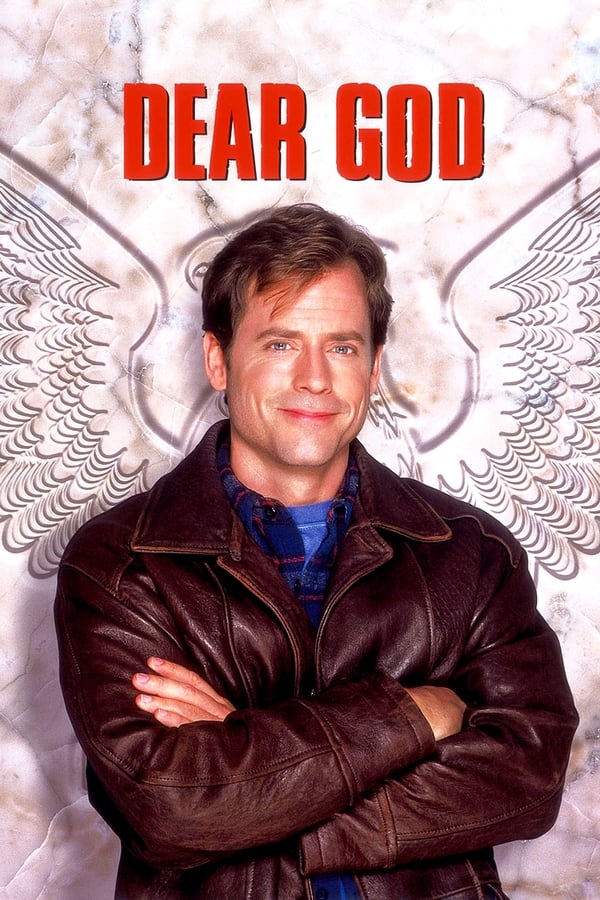
Rysher’s next film was a title called Dear God. It starred Greg Kinnear (Nurse Betty) and was distributed by Paramount Pictures and released on November 1, 1996. The film was both a box office and critical failure only bringing in $7,138,523 against its $22 million budget. Critically panned and savaged worse than Nora Ephron’s Mixed Nuts.

Rysher would then once again try its hand at a sequel film. The Evening Star was a sequel to Terms of Endearment. Released on December 25, 1996 it was a critical and commercial failure as it only grossed $12,767,815 against a $20 million budget. Releasing it Christmas Day may not have been a smart idea, as that is a day that many other competitors may release a film of their own.

Turbulence would be the next film to be released by Rysher and distributed through MGM/UA Distribution Co. Despite a $55 million budget, the film only pulled in $11.5 million citing another box office failure. Critics criticized the movie’s plot and the casting decision of Lauren Holly. Though most people have often compared it to “Die Hard” but with a female lead. Odd case though with home media releases, the film was shot in 2.35:1 but was matted down to 1.85:1 for the US DVD release. While the international releases preserved the aspect ratio, but it was not enhanced for 16×9 television screens.

Zeus and Roxanne was the final film in the distribution deal with MGM. Unlike, most of Rysher’s titles this and House Arrest were geared towards family audiences. The film’s budget is not applicable but it only earned $7.2 million at the box office. Despite being a commercial failure, the film received positive reception.

Hard Eight would be the last title released by The Samuel Goldwyn Company, but problems arose at the time of its release. The film was originally titled Sydney, and was intended to run longer. However, Rysher cut into the negatives and shorten the film’s ending and didn’t allow the director to have his own preference on the end credits. At the time of its release MGM acquired The Samuel Goldwyn Company, and it was renamed simply as Goldwyn Films. The film received an early release on January 20, 1996 at the Sundance Film Festival, and received a wide release on February 28, 1997. A budget of $3 million the movie only grossed $222,559, citing another financial loss for Rysher. Yet, it has developed a cult following through the years.

Private Parts would be Rysher’s next title and it was released through Paramount Pictures. The film is based off Howard Stern’s autobiographical novel. The film received an early release on February 27, 1997 at the Theater at Madison Square Garden, and was given a wide release on March 7, 1997. With a budget of $28 million it brought in $41.2 million and is often cited as one of the films that led to the shut down of Rysher’s theatrical arm.

The Saint would be the next film produced. It is loosely based on the character of Simon Templar created by Leslie Charteris in 1928. A series of books published as “The Saint”,ran until 1983. The character has also been featured in many movies made between 1938 and 1954, as well as a 1940s radio series starring Vincent Price (and others) as Templar, a popular British television series from the ’60s which starred Roger Moore, and finally a series from the ’70s which starred Ian Ogilvy. Relesing on April 4, 1997, $68-90 million is the estimate of the film’s budget, with a box office of $169.4 million it was a commercial success.
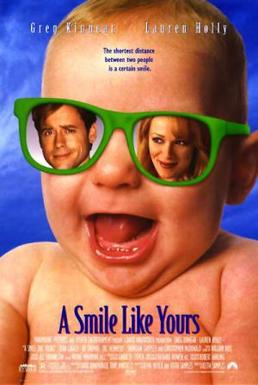
A Smile Like Yours was the next release from the company, it released on August 22, 1997. It only brought in $3,330,352 against an $18 million budget. Making it both a commercial and critical failure, and people often compared it to a sitcom rather than a theatrical film.

“Kiss the Girls” was Rysher’s next feature film. Based off James Patterson’s best-selling 1995 novel. With a budget of $27 million, it earned $60.5 million. The film was so successful that in 2001 Paramount Pictures produced and distributed a sequel titled “Along Came a Spider”

Switchback is the final film produced by Rysher Entertainment through the Paramount Pictures deal. Only bringing in $6.5 million against its $38 million budget, it was a commercial as well as a critical failure. The film was released on October 31, 1997 which was four months after Rysher decided to pull the plug on its theatrical film unit.
Rysher would be credited with two more feature films however. The Opposite of Sex which was completed after the company shut down its theatrical unit. Sony Pictures Classics picked up the movie for theatrical release, and Columbia TriStar Home Video handled the home media release. The film was shot on a budget of $5 million, but flopped only earning $6.4 million.
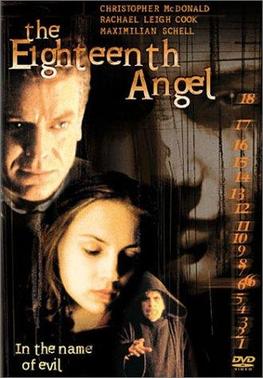
The Eighteenth Angel was the final film to come from Rysher, as it had sold other titles to various other companies. The film itself was not released theatrically, upon completion Columbia TriStar picked it up for distribution and released it on VHS and DVD. Although there was a release in Japan on December 6, 1997.
Rysher would officially exit the film industry after unsuccessful box office sales, and not being able to compete with majors, and the fact that several indie/art house studios had been bought by other companies i.e. Turner acquiring Castle Rock and MGM acquiring The Samuel Goldwyn Company. Rysher may have been down but it certainly was not out, continuing its success as a television syndicate and producer.

Nash Bridges is probably one of Rysher’s most successful shows. It was a police drama that starred Don Johnson as the titular character and featured Cheech Marin as his lieutenant. The show ran from March 29, 1996 to May 4, 2001, and was one of the company’s last shows to be produced alongside HBO shows Arli$$, the gritty police drama Oz and a short-lived court room show titled Judge Mills Lane. The HBO deal worked out so well that Rysher was allowed to internationally rep their series Sex and the City. Also, the Saved by the Bell deal paid off as Rysher not only handle the original syndication package, but a spin-off involving college years and a reboot featuring a new class.

Rysher’s on-screen identity came to an end as Cox Enterprises decided to divest its ownership in Paramount’s syndication stalwart Entertainment Tonight. As part of the deal Paramount Pictures would receive domestic and international distribution rights to the television and film library. The sale was not disclosed, but it had been proposed in 1997. Feeling that it was a good investment Cox decided to shut down Rysher’s operations, and Viacom would assume control of the company’s output. This deal allowed Paramount Television to handle the Bing Crosby Productions catalog which featured the cult classic sitcom Hogan’s Heroes as well as other content such as Ben Casey.

2001 saw a change for Rysher, the assets were sold to 2929 Entertainment. A media company ran by Todd Wagner and Mark Cuban, underneath this new company the library was able to add a reboot of Star Search to its catalog. However, 2929 couldn’t distribute any of the Rysher content due to the ongoing contract with Paramount Pictures and its television subsidiaries. This was also the year Nash Bridges left the air waves, the reason for its ending is unknown but it is speculated that a disagreement with CBS and Paramount Television is responsible. 2003 would be the final year for Rysher as its logo would cease to appear on international prints of Sex and the City.
In 2005 the assets were divided as Viacom and CBS decided to split into two separate entities. Viacom would acquire the film library, while CBS Corporation absorbed the television catalog. A year later Rysher was purchased along with Gaylord Films (What a Girl Wants) and Pandora Films (A Walk to Remember) by a media firm titled Qualia Capitol. Forming a media outlet known as Qualia Libraries Co, the library consisted of over 300 feature films and over 2,000 hours of television programming. The media firm would only last for five years, but allowed Paramount Pictures to still handle the sales and distribution of Rysher’s titles as well as allowing CBS to handle the television catalog.
However, in 2010 Rysher was forced to pay $50 million to actor Don Johnson because of a stipulation saying that he’d own 50% of Nash Bridges if the show exceeded 66 episodes. Which it did, as it ran for 122 episodes and Rysher had stiffed him the fifty percent of the show’s revenue. Rysher would later face a lawsuit involving Hogan’s Heroes and the WGA, but the judge suggested it would be up to the arbitrator to decide if the claim was meritorious. The case was later ruled in favor of the plaintiffs who won back the rights and ended a ten year litigation.

In 2011 Vine Alternative Investments had acquired Qualia Libraries Co. and it was integrated into Lakeshore Entertainment in 2015. Vine would later acquire Lakeshore’s library and international sales operations in 2019. The acquisition would put cult classics like Heathers, Kingpin and many others all under the same umbrella. Viacom and CBS would later re-merge to form ViacomCBS, thus reuniting the distribution rights to Rysher’s library. As for Rysher itself it now operates as a limited partnership for Vine under the name Vine Rysher Company LP, and serves as the trademark holder for Hogan’s Heroes despite ViacomCBS holding partial rights.
Rysher as a whole faced problems as soon as it became a big company. Cox Enterprises bought it as it ran into financial problems, and as it tried to build itself up as a competitor to major motion picture studios it failed as it didn’t have a solid distributor (where as Castle Rock had Columbia/Sony, Rysher used various third parties.) However, the company’s lucrative success as a television syndicate and producer would keep it thriving even in its final years. The company may no longer be around but its products are in good hands. That about wraps it up for this article, I hope you enjoyed it and I’ll see you in the next article. This is ZombieFilms93 signing out!
 Bestower of Film Knowledge